



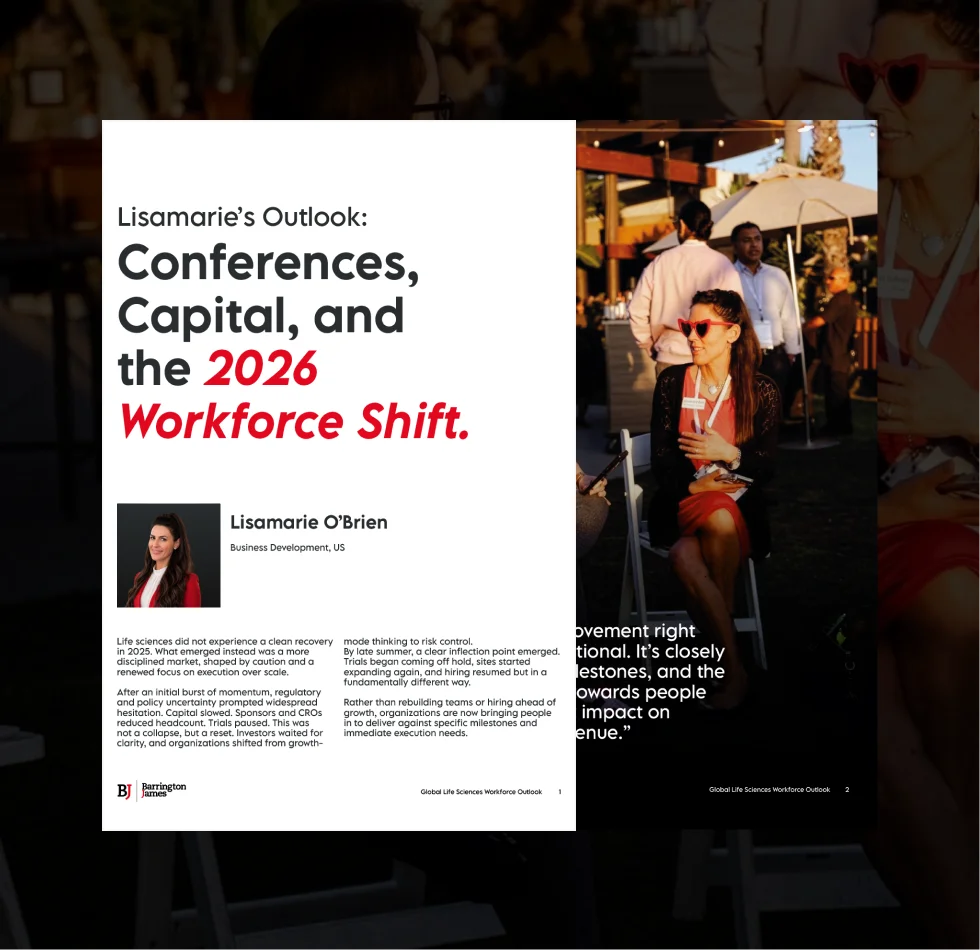
Lisamarie’s Outlook: Conferences, Capital, and the 2026 Workforce Shift
Signals emerging across life science recruitment are pointing to a more disciplined, execution-focused approach to hiring as the industry moves into 2026.
The market has not returned to previous growth patterns. Instead, organisations are adapting how they deploy talent, align hiring to delivery, and manage capital more carefully.
Download the full outlook to explore how capital behaviour, conference conversations, and recruitment trends are reshaping workforce strategy across the industry.
Hiring Challenges
Problems we know you face when hiring.
A poor hiring decision can have serious consequences for your business, regardless of its size. Making the wrong hire can lead to substantial costs, hinder innovation, reduce productivity, and harm your brand's reputation. In a competitive industry, it is essential to identify and attract the right talent for your organization
Non-Committal Candidates
We go beyond the CV. From the first conversation, we take the time to understand each candidate's motivations, concerns, and long-term career goals. By building trust early and maintaining open communication throughout the hiring process, we help reduce the risk of candidate drop-off, counteroffers, and last-minute surprises.
Attracting Passive Candidates
The talent you want is rarely actively applying. Often thriving in their current role, they may be unaware of your organisation and the opportunities you can offer. Through targeted headhunting, market mapping, and our extensive global network, we connect you with high-calibre professionals who aren't accessible through traditional recruitment channels, helping you secure the right talent faster.
Lengthy Hiring Processes
Speed matters when securing top talent. Our specialist consultants understand the markets they recruit within, enabling them to quickly identify, engage, and qualify candidates who meet your requirements. By streamlining the hiring process and maintaining candidate engagement throughout, we help reduce time-to-hire without compromising on quality.
Skills Shortages
When specialist talent is scarce, expertise matters. Through targeted headhunting, global talent mapping, and decades of sector-specific recruitment experience, we connect organisations with professionals who have the skills, experience, and industry knowledge needed to make an immediate impact.

“There is hiring movement right now, and it’s intentional. It’s closely tied to specific milestones, and the roles are geared towards people who have a direct impact on execution and revenue.”
Purpose, Audience & Key Takeaways.
What You'll Take Away
- A clearer view of how hiring is evolving heading into 2026
- Insight into how capital, execution, and workforce strategy are becoming more closely linked
- A structured perspective on where early hiring signals are emerging
Who This Outlook Is For
This report is designed for leaders making hiring and workforce strategy decisions across life sciences, including:
- Sponsors and biotech leadership teams
- CRO and clinical operations leaders
- Site and site network leadership
- Talent and workforce strategists
- Private equity and venture investors
About Barrington James
Barrington James partners with life sciences organisations globally, supporting hiring and workforce strategy across clinical development, biotechnology, pharmaceuticals, medical devices & healthtech.
Ongoing engagement with hiring leaders and investors provides visibility into how talent decisions are evolving as market conditions shift.
About the Author

Lisamarie works closely with organisations across the life sciences ecosystem, maintaining ongoing dialogue with sponsors, CROs, and site networks navigating changing hiring conditions. Her perspective reflects direct exposure to conference discussions, workforce planning conversations, and evolving market sentiment.
FAQ's
Frequently Asked Questions.
How do I find experienced commercial professionals in the pharmaceutical or biotech industry?
Commercial life science hiring — covering sales, marketing, market access, and business development — demands recruiters who understand the unique commercial landscape of the industry. Barrington James has a dedicated commercial practice placing talent across pharma, biotech, and medtech companies worldwide.
What commercial roles do life science recruitment agencies typically fill?
Commercial life science roles include Medical Sales Representatives, Key Account Managers, Marketing Managers, Business Development Directors, Commercial Directors, and Chief Commercial Officers. Barrington James covers the full commercial hierarchy, from field sales to C-suite appointments.
What recruitment trends are shaping the life sciences industry in 2026?
The most significant recruitment trends in life sciences include more selective hiring, increased demand for specialist talent, greater use of contract professionals, and a stronger focus on workforce planning. Pharmaceutical, biotech, and medtech companies are aligning hiring decisions more closely with clinical development milestones, commercial objectives, and operational priorities.
How are life sciences recruitment trends affecting hiring strategies?
Current life sciences recruitment trends are driving organisations to adopt more agile workforce strategies. Many employers are combining permanent and contract talent to manage costs, access specialist expertise, and respond quickly to changing project demands across research, clinical development, regulatory affairs, and commercial functions.
What conferences does Barrington James attend?
Barrington James attends leading life sciences conferences across pharmaceuticals, biotechnology, medical devices, clinical research, and healthcare worldwide. By connecting with hiring leaders, innovators, investors, and industry professionals across North America, Europe, and Asia-Pacific, we gain first-hand insight into emerging recruitment trends, talent demand, and workforce strategies, helping us provide informed market intelligence and recruitment advice to our clients.
Learn more about our conference attendance or arrange a meeting at an upcoming event.
How are life sciences recruitment trends influencing workforce strategy?
Life sciences organisations are adopting more flexible workforce strategies to balance growth, costs, and delivery demands. Many employers are combining permanent and contract talent to access specialist expertise while maintaining agility across research, clinical, regulatory, and commercial functions.