


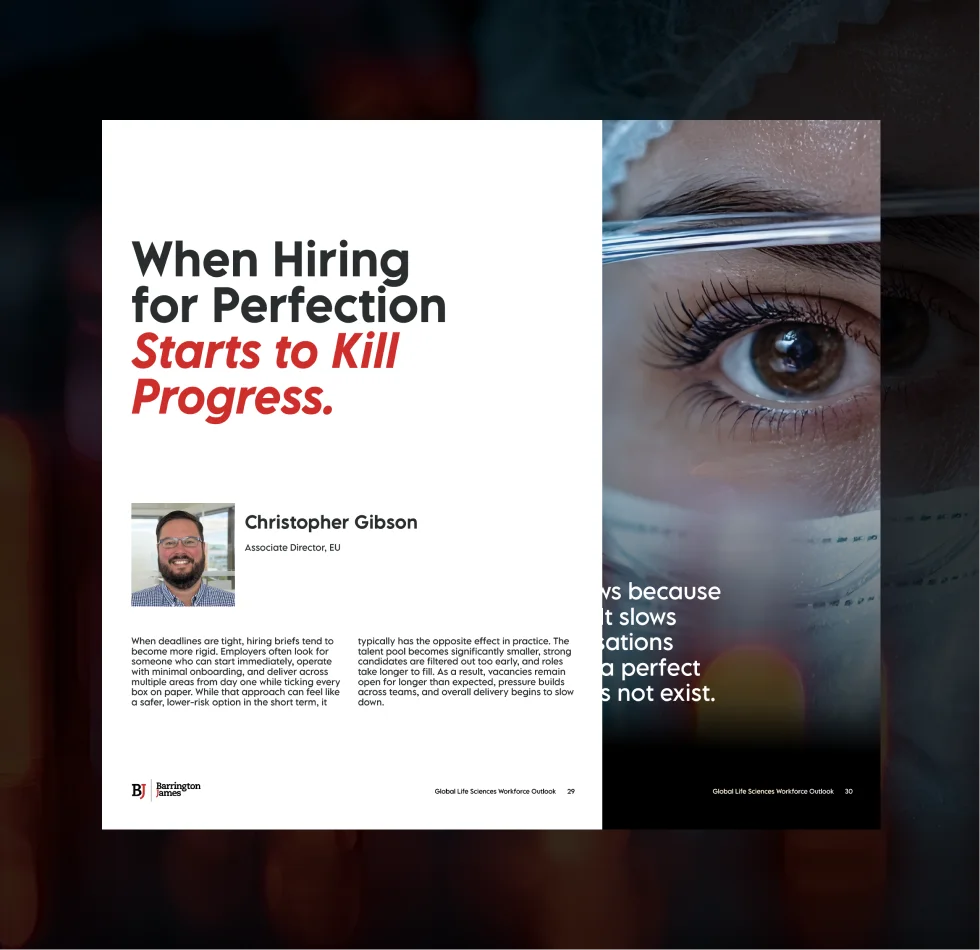
When Hiring for Perfection Starts to Kill Progress.
Hiring delays in the life sciences are rarely due to a lack of talent. More often, they stem from how roles are defined and how expectations are set at the start of the process.
When hiring is built around a “perfect” candidate, progress slows. The focus shifts towards finding someone who can meet every requirement immediately, rather than identifying the capabilities needed to deliver.
Download the full report to understand how bias in hiring is shaping workforce planning, influencing recruitment strategy, and extending hiring timelines across life sciences organisations.
Hiring Challenges
Problems we know you face when hiring.
A poor hiring decision can have serious consequences for your business, regardless of its size. Making the wrong hire can lead to substantial costs, hinder innovation, reduce productivity, and harm your brand's reputation. In a competitive industry, it is essential to identify and attract the right talent for your organization
Non-Committal Candidates
We go beyond the CV. From the first conversation, we take the time to understand each candidate's motivations, concerns, and long-term career goals. By building trust early and maintaining open communication throughout the hiring process, we help reduce the risk of candidate drop-off, counteroffers, and last-minute surprises.
Attracting Passive Candidates
The talent you want is rarely actively applying. Often thriving in their current role, they may be unaware of your organisation and the opportunities you can offer. Through targeted headhunting, market mapping, and our extensive global network, we connect you with high-calibre professionals who aren't accessible through traditional recruitment channels, helping you secure the right talent faster.
Lengthy Hiring Processes
Speed matters when securing top talent. Our specialist consultants understand the markets they recruit within, enabling them to quickly identify, engage, and qualify candidates who meet your requirements. By streamlining the hiring process and maintaining candidate engagement throughout, we help reduce time-to-hire without compromising on quality.
Skills Shortages
When specialist talent is scarce, expertise matters. Through targeted headhunting, global talent mapping, and decades of sector-specific recruitment experience, we connect organisations with professionals who have the skills, experience, and industry knowledge needed to make an immediate impact.

“The real answer is for businesses to start investing in more junior talent, hiring people with the baseline skills and knowledge, but also the aptitude and long-term potential, and then harnessing that potential.”
Purpose, Audience & Key Takeaways.
What You'll Take Away
- A clearer understanding of how hiring constraints develop
- Insight into how expectations shape talent availability
- A more structured way to approach recruitment strategy and workforce planning
Who This Outlook Is For
This report is designed for those involved in recruitment strategy and workforce planning across life sciences, including:
- Life science leadership teams
- Clinical and operational leaders
- HR and talent strategy professional
- Scaling organisations navigating complex hiring markets
- Investors assessing delivery risk
About Barrington James
Barrington James partners with life sciences organisations globally, supporting recruitment strategy, workforce planning, and life sciences executive search across clinical development, biotechnology, pharmaceuticals, medical devices & healthtech.
Ongoing engagement with industry leaders provides visibility into how hiring strategies are evolving as delivery pressures shift.
About the Author

Chris works with life sciences organisations on recruitment strategy, workforce planning, and specialist hiring challenges across biotechnology, pharmaceuticals, SaaS, and clinical services. With over 14 years of experience in life sciences recruitment and executive search, his perspective is shaped by direct exposure to hiring trends, workforce planning challenges, and evolving talent demands across specialist and leadership hiring.
FAQ's
Frequently Asked Questions.
Why does hiring slow down in life science?
Hiring can slow when organisations focus on finding an exact match rather than prioritising potential, transferable skills, and long-term capability. Current hiring trends show that employers who adopt a more flexible recruitment strategy are often able to access talent more quickly and reduce time-to-hire.
How does bias affect hiring decisions?
Bias in hiring can limit candidate pools by favouring familiar backgrounds, career paths, or experiences. By focusing on skills, potential, and business impact, organisations can make more informed hiring decisions and improve recruitment outcomes.
Why is workforce planning important?
Effective workforce planning helps organisations identify the capabilities they need today and in the future. By aligning hiring plans with business objectives, employers can make more strategic recruitment decisions and respond more effectively to changing market demands.
Why is executive hiring becoming more challenging?
As hiring trends continue to evolve, organisations are competing for leaders with increasingly specialised expertise and broader commercial responsibilities. This has made executive search more complex, requiring a clear recruitment strategy and access to specialist life science recruiters who understand the market.
Why work with specialist life science recruiters?
Specialist life science recruiters bring deep market knowledge, established talent networks, and a detailed understanding of industry-specific hiring challenges. With dedicated teams covering functional and geographic markets worldwide, Barrington James helps organisations identify, engage, and secure the talent needed to achieve their business objectives.