



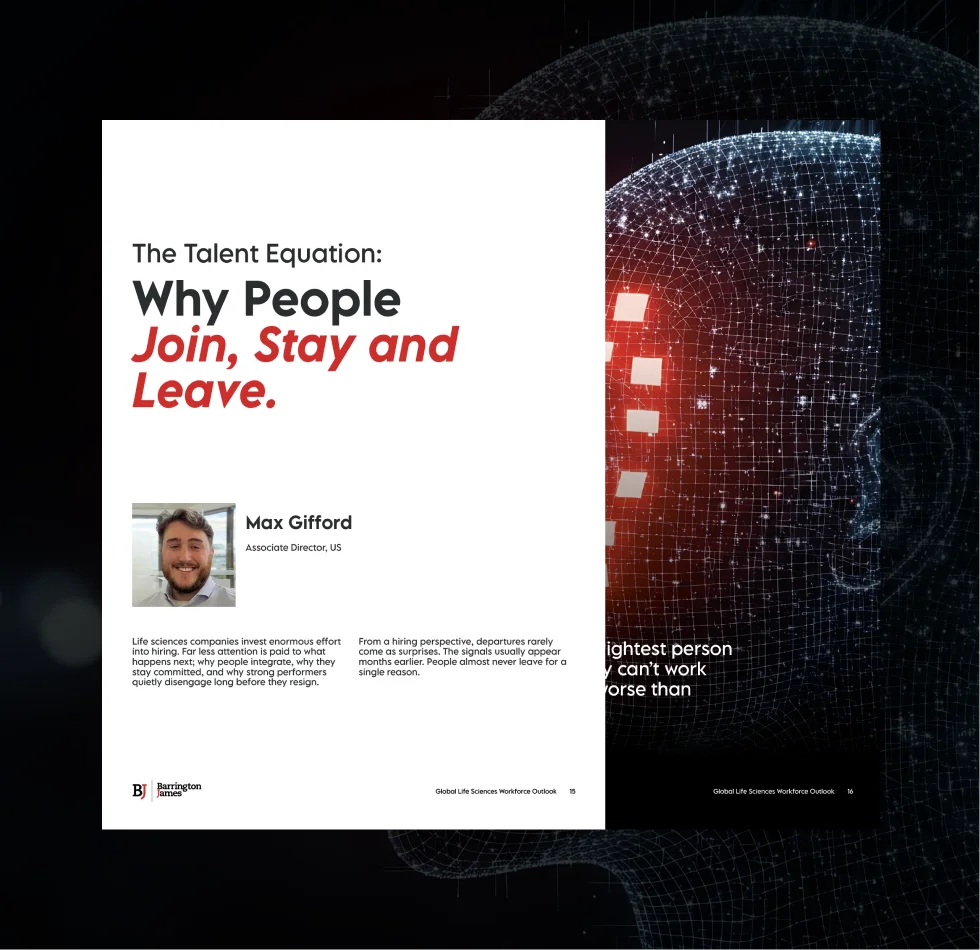
The Talent Equation: Why People Join, Stay, and Leave.
Life sciences organisations invest heavily in hiring. Far less attention is paid to what happens next.
In life sciences recruitment, candidate experience does not end at the offer stage. It continues through integration, how credibility is built, and how individuals gain momentum inside an organisation.
Download the full report to explore how hiring strategy and retention strategy shape whether employees integrate, stay, or quietly disengage over time.
Hiring Challenges
Problems we know you face when hiring.
A poor hiring decision can have serious consequences for your business, regardless of its size. Making the wrong hire can lead to substantial costs, hinder innovation, reduce productivity, and harm your brand's reputation. In a competitive industry, it is essential to identify and attract the right talent for your organization
Non-Committal Candidates
We go beyond the CV. From the first conversation, we take the time to understand each candidate's motivations, concerns, and long-term career goals. By building trust early and maintaining open communication throughout the hiring process, we help reduce the risk of candidate drop-off, counteroffers, and last-minute surprises.
Attracting Passive Candidates
The talent you want is rarely actively applying. Often thriving in their current role, they may be unaware of your organisation and the opportunities you can offer. Through targeted headhunting, market mapping, and our extensive global network, we connect you with high-calibre professionals who aren't accessible through traditional recruitment channels, helping you secure the right talent faster.
Lengthy Hiring Processes
Speed matters when securing top talent. Our specialist consultants understand the markets they recruit within, enabling them to quickly identify, engage, and qualify candidates who meet your requirements. By streamlining the hiring process and maintaining candidate engagement throughout, we help reduce time-to-hire without compromising on quality.
Skills Shortages
When specialist talent is scarce, expertise matters. Through targeted headhunting, global talent mapping, and decades of sector-specific recruitment experience, we connect organisations with professionals who have the skills, experience, and industry knowledge needed to make an immediate impact.

"The question leaders should be asking isn’t why did they leave? It’s: When did they start disconnecting…and what did we miss?"
Purpose, Audience & Key Takeaways.
What You'll Take Away
- A clearer understanding of how hiring connects to retention outcomes
- Insight into what influences whether new hires integrate successfully
- A more structured way to approach candidate experience, onboarding, and retention strategy
Who This Outlook Is For
This report is designed for those responsible for hiring, integration, and retention across life sciences, including:
- Life science leadership teams
- CRO and clinical operations leaders
- Talent and HR professionals
- Investors involved in workforce decisions
About Barrington James
Barrington James partners with life sciences organisations globally, supporting hiring strategy, talent attraction, candidate experience, and retention strategy across all life science disciplines, including biotechnology, pharmaceuticals, medical devices, healthtech and clinical development.
About the Author

Max works closely with life sciences organisations navigating hiring, integration, and retention challenges across senior and specialist roles. His perspective reflects direct exposure to leadership conversations, workforce planning, and hiring decisions.
FAQ's
Frequently Asked Questions.
Why is candidate experience important in life sciences recruitment?
Candidate experience plays a critical role in attracting and retaining talent in the life sciences industry. A positive experience, from initial engagement through to onboarding, can strengthen employer brand perception, improve offer acceptance rates, and support long-term retention. As a specialist life sciences recruitment partner, Barrington James helps organisations create hiring experiences that engage candidates, strengthen talent attraction, and improve retention outcomes.
How can I improve offer acceptance rates?
Improving offer acceptance rates starts with understanding what candidates value most. Clear communication, timely feedback, competitive compensation, and a positive candidate experience can all influence a candidate's decision to accept an offer. Through market insight, candidate engagement, and consultative hiring support, Barrington James helps organisations reduce candidate drop-off, improve offer acceptance rates, and secure the talent they need to achieve their business objectives.
What talent and people-focused roles are in demand across the life sciences industry?
Demand continues to grow for professionals specialising in Talent Acquisition, Human Resources, Employee Experience, Learning and Development, and Talent Management. As organisations place greater emphasis on candidate experience and retention, these roles play an increasingly important part in supporting long-term business growth.
Why is integration critical to retention?
The first few months of employment often determine whether a new hire stays and succeeds. Effective integration helps employees understand expectations, build relationships, and contribute more quickly. When onboarding and support are lacking, organisations may face higher turnover and reduced long-term retention.
What drives retention in life sciences organisations?
Successful retention strategies are built on career development, strong leadership, meaningful work, and clear progression opportunities. Employees who understand their future within an organisation and feel supported in their development are more likely to remain engaged and committed long term.
Why do employees leave life sciences organisations?
Employees rarely leave because of a single event. More often, turnover occurs when career progression slows, expectations are not met, or employees feel disconnected from their work and future opportunities. Understanding these factors can help organisations strengthen retention strategies, improve employee experience, and reduce avoidable turnover.